

Should broadcasters club together to take on the tech companies?
More voices are calling for greater collaboration across tech, advertising and more.

This week, I’ve covered the following:
Will broadcasters collaborate more across tech, advertising and beyond?
Are we entering a new phase where YouTube will face more challenges by partners and media companies?
Netflix’s price rises in Italy ruled illegal - what happens if this becomes the case across the EU?
A great summary of the kids TV crisis as played out in the DCMS’s hearings into the sector
A rather dystopian tale of music, AI and copyright theft
A new AI generated convergence report that is seeking some beta testers.
Should broadcasters work together to compete with the big tech?
At the end of last year, I wrote some predictions about what to watch for in 2026 - including one that suggested the rise of YouTube might stop being inexorable - as well as this one below about UK broadcasters working together.
The gist of the concept is as follows:
The global streamers (and YouTube) generates income across the world, which makes it very difficult for individual UK broadcasters to compete on tech spend when they only are a single player in one market.
By working together to operate a shared content distribution infrastructure, they at least could be pooling costs and driving fees down with providers through scale.
Project Kangaroo foundered 15 years ago, because back then the market was UK only, and it was seen as monopolistic within the UK territory. Now that we have a globalised market, it should be revisited, and also crucially, ensure that all parties including Pact and independent producers are bought into the concept.
And so, it is interesting to see similar suggestions being posed about different parts of the TV ecosystem, such as tech investment, advertising marketplaces and measurement, or wider questions around sports rights, regulatory policies, kids safety functionality, public service content discoverability, kitemarking and more. Here, I’ve covered only a few of these areas, but it does appear that more may come on the horizon.
Collaboration on tech platforms
Tom Morrod from Caretta Research spoke recently at The Media Leader’s Connected TV World Summit. He said that only the largest broadcasters can compete with global streamers in terms of content investment, and still have the cash left over to build and run technically competitive streaming platforms.
He argued that broadcasters faced a stark choice in the next five to 10 years, and their unique selling point is live content such as sports, news and country specific events.
This is where they should be spending their money, which could mean limiting spending on streaming platforms.
There is now a conflict between content creation, streaming platforms and adtech, which must all come from the same budget. Do you want to be a content curator or a content platform?
And John Moulding in response to these comments said:
His [Tom’s] argument is that for smaller broadcasters, running your own streaming platform is becoming an expensive luxury.
As longtime readers are familiar, the economics of streaming are fundamentally different (and less profitable) than TV, thanks to the level of investment required in the tech infrastructure, combined with the variable costs of distribution depending on how many megabytes of content are viewed, in comparison to the fixed cost model of TV broadcasting.
Considering Netflix is rumoured to have spent $1bn on their Open Connect infrastructure, it is reasonable to question how smaller or non-global companies can compete on this front. And you can see the benefits of this distribution investment in Netflix’s profit margins - at 30%, some of this comes from having lower distribution costs.
Indeed, the above article says:
Caretta Research estimates that an average streaming service with a million subscribers spends approximately one-third of its costs on content and carriage, one-third on marketing and customer acquisition, and one-third on technology (including CDN (content delivery network) costs.
Of course, much investment has already happened in this space by broadcasters. The BBC built its own CDN in the 2010s, and there is a wealth of expertise within the broadcasters covering technical, product, distribution, user experience, data and adtech.
However, at the fundamental level here, national broadcasters or smaller global players are going to struggle against tech companies who both have vast in house engineering capacity, and also deep pockets to continue to invest in their technology at a pace that few others will be able to keep up.
Therefore, the choices become brutally stark: work together to create a shared tech infrastructure, distribution, analytics, measurement, advertising, AI and data platform? Outsource content discovery and delivery to third parties such as Amazon, YouTube, and OS apps for CTVs, mobile and tablets? Continue to invest in individual platforms, knowing that it is hard if not impossible to keep pace?
Advertising and measurement
Meanwhile, Justin Lebbon has been asking a similar question about broadcaster collaboration, but this time from the perspective of advertisers and measurement. As he says, broadcasters need:
scale - which the platforms have
consistent data - so advertisers can target audiences across TV
simplicity - to reach a specific segment or audience via a simple set of tools.
He goes on to say that broadcasters need to:
… align on outcomes: siloed measurement, different methodologies, multiple currencies…it doesn’t work. It’s inefficient and expensive.
… share the cost of innovation. Collaboration reduces capex and sends the right signal to the market: TV is investing to compete.
And in Australia there are movements on this front, with broadcasters Nine and Seven Network - despite being legendary rivals - are working together to create a unified and transparent approach to ad tech and the buying experience. Plus of course, here in the UK, Sky, ITV and Channel 4 have a shared marketplace for advertisers across multiple services.
As for the US, Justin wrote this post (as a non-American) trying to understand the lack of collaboration between the US networks in taking on YouTube - it is from 10 months ago, but still, it is worth a read, and especially the lively and informed discussion that follows.
Justin asks:
Why isn’t the US doing what other markets are doing/trying to do? Why is it just down to markets outside of the US to collaborate?
Why can’t US networks do these things: Pool inventory, Sell it together, Ring-fence it with consistent measurement, Cut the ad tech tax, Offer scale, simplicity, and transparency.
The responses include one obvious answer to this question:
Its all fun and games until the FTC figures out there is collusion and anti-competitive monopolist behavior…ironically.
And TV Rev’s Alan Wolk (who is writing a new book, which will be a must read - there is an excerpt here) said the following:
It goes back to something Benjamin Franklin said when we signed the Declaration of Independence and freed ourselves from the tyrannical British yoke: "We must all hang together, or assuredly, we will all hang separately."
And yet... they all think they are going to be the one who "wins" as if it were a zero sum game with one winner and multiple losers and not one where there will be many winners.
Plus they do not realize that their real enemies are not each other, but rather, Meta, Amazon and Alphabet.
This all might seem fanciful - indeed, there are significant legal and competition issues to consider, however, it does appear that networks and studios have woken up to the real threat being the tech companies. Whether that results in closer collaboration in ways that aren’t just more mergers - well, we’ll have to wait and see.
Commercial terms
Last week, Channel 4’s chief commercial officer Rak Patel called for better deal terms from YouTube, echoing the same point made by ITV a few months ago.
He is quoted in the Broadcast piece above, saying:
Many people, Google included, think YouTube is the new TV .. Well, if it wants to be TV, it needs to play by TV norms, ensuring fair renumeration for ad revenues.
… To reinvest as much of our sales revenues as we can into the UK’s creative industry, we need to get paid a fair price.
Unfortunately, that’s not the case with YouTube. They take a large share of the advertising revenue we make from our content on their platform – significantly more than others, and we think it’s time we got fair commercial terms that are reflective of the investment we make in British creativity.
Mike Darcey over on LinkedIn outlined the original argument for YouTube distribution for Channel 4 - that it is incremental, rather than cannibalistic:
And if these audiences are truly incremental, surely it is all upside anyway, so should not matter. Unless the audiences are not quite as incremental as previously claimed, and C4 is starting to worry that, in the medium to long term, the low-return YouTube strategy is at the expense of audiences in higher rating environments?
The question to ask of those with long memories at Channel 4: the original deal put the entire 4oD catalogue on YouTube back in 2010, only to remove it all four years later. It was said publicly that this was to concentrate on its own platforms - but it would be interesting to know what the commercial performance and audience profile had been during this time, and whether it was incremental views from new audiences or not.
These comments from Rak Patel echo similar sentiments from the BBC, who said ‘YouTube economics are challenging for broadcasters to make a positive return on premium content’. This was in response to a government green paper suggesting PSB content should be distributed on third parties like YouTube:
Advertising pricing is significantly lower than linear and Broadcaster Video On-Demand (BVoD), fewer adverts are served, and the platform takes a large share of the revenue. This means that broadcasters can expect to earn much less for every hour of content viewed on a video sharing platform than they would on their own VoD service.
As for ITV, Alex Pumfrey, Director of Strategic Partnerships made a similar argument to the BBC and Channel 4 at the VOD Professional OTT Question Time Live 2026 Summit.
She said that ITV is constrained by the revenue share terms from YouTube, which is ‘out of kilter with all our other distribution partnerships’. She said this model works for creator economics, but doesn’t work for public service economics, as the algorithm picks off niche interests, and doesn’t function as a flywheel of entertainment, news, drama and so on. She said the YouTube flywheel doesn’t work for the full breadth of ITV’s content, and went on to say that it is impossible for ITV to put its most commercially successful programming onto a platform like YouTube.
Last point on this - Wim Ponnet commented under Mike’s LinkedIn post (mentioned above) that the issue for Channel 4 et al is treating YouTube as the end destination, rather than the starting point to derive greater value elsewhere:
The reality is that C4 isn’t really being underpaid by YouTube — it’s just only capturing the most obvious, lowest-yield layer of value. The impression. Everything else — audience insight, derivative formats, conversion into higher-value environments, sponsorship packaging — sits largely untapped.
Re-engineering where value is derived from in the TV model
Wim’s point comes back again to that central thesis by Doug Shapiro, where in the age of infinite content, then the content is the top of a funnel that acts as marketing to drive value elsewhere - events, subscriptions, experiences, merch sales, and so on. The obvious challenge is for broadcasters (and indeed, many others in the TV business especially producers) is this: few companies are set up to operate in this model. So yes, Disney, with its IP that drives audiences to the parks and experiences - and even then, they are seeing smaller profits from their streaming business compared with linear networks.
But for UK public service broadcasters, the end destination is often the watching of the show and the advertiser income that comes from that. Similarly, for many producers, profits are derived from the creation of the content itself, not using that content as marketing and awareness for some other profit making activity further down the line.
Reengineering a business so content is the top of the funnel is an enormous mid-air refuelling exercise, however may be an essential strategy for some, to sustain beyond a world of commissions and chasing advertising cash.
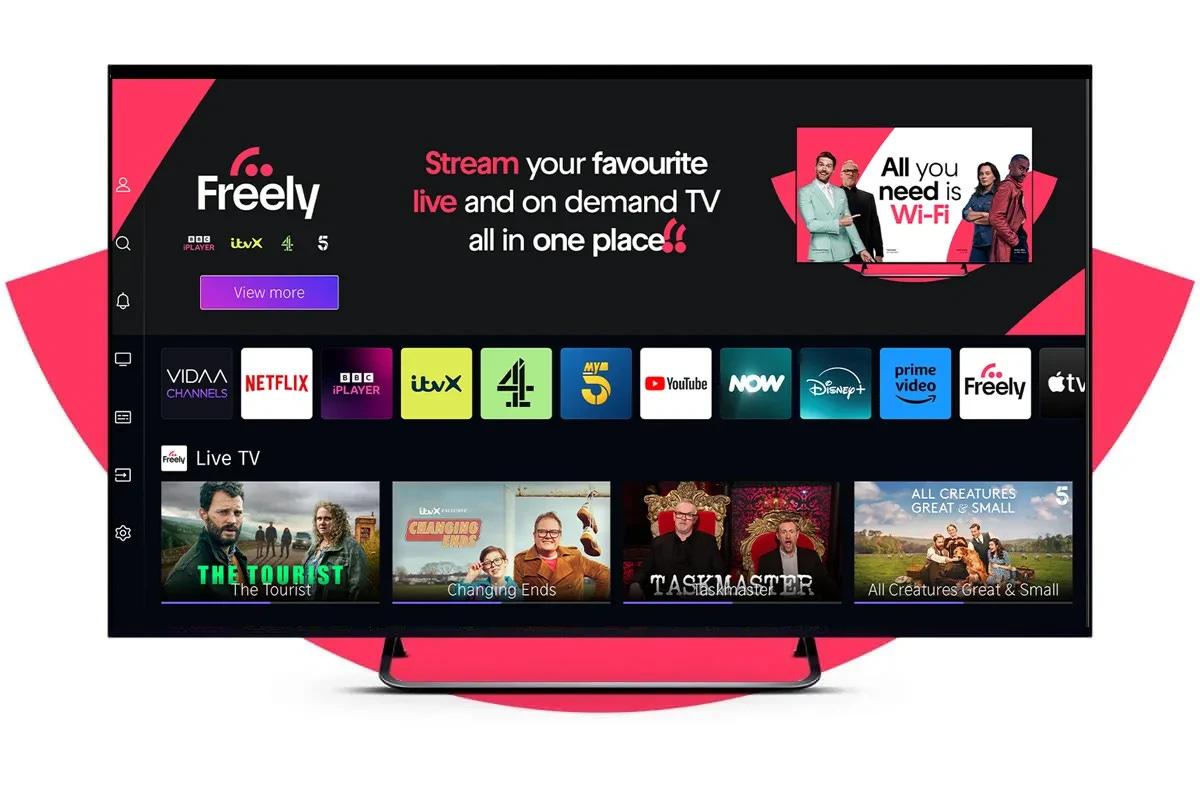
Obviously, getting broadcasters to work together on collaborative initiatives has significant regulatory, logistical, strategic and technical challenges. However, this isn’t without precedence - Freeview/Freely being the most obvious, where the BBC, ITV, Channel 4 and Channel 5 work together to create a free streaming and VOD service for UK residents, without needing a dish or an aerial.
Another area where the right approach overrode significant institutional stasis and territorial barriers is the Government Digital Service (GDS) which managed to create the single sign in technical infrastructure that UK citizens benefit from via our Gov.uk services. For anyone interested, James O'Malley has written extensively on this subject, and there is a lot to learn about how to get individual fiefdoms to work together on shared technical projects.

To Alan Wolk’s point above - UK broadcasters certainly have long woken up to the reality that the real competitors are Amazon, Google and Meta. English speaking territories are more exposed to these global players, so increasingly, perhaps the same awakening is happening in other territories like the US, Australia and so on.
Is YouTube starting to face more questions?
Remember when YouTube and Meta lost that court case a few weeks ago - which said they are basically running faulty products? I wrote about it here:

Google said the following in response to the verdict, when they said would be appealing the decision:
This case misunderstands YouTube, which is a responsibly built streaming platform, not a social media site.
This defence should have been met with eyebrow raises, if not guffaws, considering a social media site is defined as an internet based platform that allows users to create, share and exchange content such as text, images, video and live streams. So in Google’s logic, TikTok and Instagram are social media websites, but somehow, YouTube isn’t despite being the original video sharing website, hosting live streams, as well as having a TikTok and Reels competitor in Shorts. So keep a close eye on how YouTube tries to run this argument on appeal and also via PR and fanboys, that somehow they are different from everyone else.
Having said that, YouTube is hardly the lone company wanting it both ways - and indeed, for many reasons, they’ve largely been given a free pass by networks, studios and broadcasters for much of its 20 years in existence.
However, now that the big legacy media beasts have realised they are in a battle for survival and have joined the fray. Does this mean that YouTube will be facing a new level of push back?
The competition YouTube is facing is fierce and on multiple fronts. They are in stiff competition with TikTok and Meta Reels for vertical video attention and revenues (plus all the smaller microdrama and vertical content apps), Here, YouTube might be looking with envy at the relatively poor revenue sharing policies of these companies in comparison to their own. On another front, they slugging it out for podcast audiences with Netflix, Apple and Spotify, who are all innovating in the adtech space as well as delivery and audience retention. Plus YouTube is wanting a bigger role in brand partnership relationships.
And then, they are also trying to position themselves as a ‘responsibly built streaming platform’ where they compete with Amazon and Google, the big global players like Disney, and now are facing increasing pressure from media companies like BBC, Channel 4 and ITV on their deal terms.
If they are a ‘responsibly built streaming platform’ akin to Netflix et al, then forget TikTok and Reels’ revenue sharing policies or even the $100bn they’ve shared thus far via their partner programmes: the view of media companies could be that YouTube’s terms should be competitive with the established TV and movie licensing market - which as the BBC, Channel 4 and ITV contend, requires far more income to be shared to IP owners, with YouTube taking a much smaller cut.
And while these are only three UK broadcasters making these arguments so far, multiply that by all the countries across the world and those companies with huge volumes of titles on the platform, and perhaps we can see a new negotiating trend start to emerge.
Netflix’s price rises in Italy ruled illegal
Last week, a court in Italy ruled that Netflix’s subscription price rises are illegal, and that they need to return their prices for Italian customers back to 2015 levels, while also repaying the difference to all of their subscribers.
This isn’t a standalone case, there are other similar cases Spain and Germany, who are using the same EU Directive to argue that Netflix’s mechanism of informing customers of a price increase by sending an email with the option of cancelling doesn’t equate to proper consent.
It isn’t clear how this is supposed to work in the view of the legislators or courts: is there some sort of more informed consent process that needs to be established? Do customers lock in at the price they take out the subscription so only new customers pay the higher prices?
This is one of those stories that if it holds on appeal, and becomes the situation across the whole of the EU, then it has really quite wild implications for all subscription businesses, and not just those in the streaming market.
Kids TV: The latest from the UK’s Department for Culture, Media & Sport hearings
Emily Horgan and her newsletter the Kids Streaming Sphere published a guest post last week from Jodie Morris, a kids media commercial and content expert, who has been tracking the DCMS hearings into kids TV that have been taking place over the lats few months.
Jodie’s piece is worth reading in full, even if you don’t work in kids TV, as that genre can be somewhat of a canary in the coal mine for the rest of the TV and content industries. To give a flavour:
The economics of children’s TV have become almost impossible to sustain. Production costs have risen, while commissioning budgets have been cut. BBC Children’s remains central to the system, but of course can’t fund everything on its own. At the same time, global platforms have not stepped in to replace funding of kids content in any consistent or reliable way.
…
YouTube is central to this debate. Some suggest that YouTube, which benefits from children’s viewing in a big way, should contribute financially to the system: either through improved commercial terms for high-quality kids creators, or by directly contributing to a children’s content fund. Others have suggested it should be required to surface more high-quality, culturally relevant content. But YouTube is adamant that it is simply “the world’s largest video library,” has no role in commissioning or curating content and therefore—from what I could tell—believes it should bear no responsibility towards supporting the industry beyond providing its distribution tool.

A dystopian tale about music, copyright and AI
Murphy Campbell is a musician who had a whole bunch of her songs fed into AI, and then those AI generated versions of her music were uploaded to YouTube via a distributor Vydia. These uploaded videos where then used to claim ownership of several of Murphy Campbell’s videos, with her receiving a notice from YouTube reading: “You are now sharing revenues with the copyright owners of the music detected in your video, Darling Corey.”
She outlines the situation below, and the Verge’s report below covers all the ins and outs.
This is a great example of how theory can fall apart in practice; the theory being it plausible and reasonable to expect artists to opt out of their works being used to train LLMs, and also that the automated tools on platforms are able to deal with these types of complexities.
Remember this case of KFresh, Suno and Timbaland I wrote about last summer?
This caused somewhat of an online storm, and KFresh went on to do the following interview with Curtiss King:
I covered this situation in more detail here:

KFresh didn’t know his work was being used in this way until Curtiss King spotted it. And Murphy said she ended up with no human route to professionally deal with this via YouTube (she said ‘they don’t get involved’), so only could resort to the court of public opinion by making a video summarising her situation.
Which in the end worked, however it does feel that the legal and commercial frameworks for this type of activity should be significantly more robust so individuals don’t have to try to go viral to sort out copyright infringement.
Vibe coding a new convergence reporting aggregator
After I wrote about vibe coding a few weeks ago, Jon Stahl messaged to say that he has built an aggregator that brings together all sorts of stories from across the space where the creator economy and traditional media converge.
He’s called it The Convergence Report, and it uses a combination of Google Alerts, RSS feeds and web crawling, to filter pertinent stories - such as indie TV, branded series, creator-led productions – and presents them in a database where users can filter by a bunch of different attributes and set up custom email alerts that are way smarter than a simple Google Alert.
He says:
This arose from me finding Google Alerts hilariously inadequate and delivering results that were super unrelated to the information I was looking for.
So, to that end, he’s looking for some guinea pig beta testers. If of interest, send him a DM on Substack or email him to get a login.
YouTube is such a bizarre creature. It's basically public access television in the 21st century. Full of hobbyist content, MTV and major media partners putting their content, UGC and what not. YouTube is the most watched platform on the planet and yes, you're right it has social media content as well. The only real platform I find worth paying for is YouTube premium where the ad-less experience comes bundled with YouTube Music so their value proposition beats all other platforms. You can literally live off YouTube, your internet connection bill and the streaming platform of your choice (or two) for the month.