

How to launch your own documentary
The tools on the internet - plus the right mindset - can help you reach audiences and make money.

This week, I did a seminar at Documentary Campus in Munich, for the 2026 cohort of film makers on their programme (if you are a documentary maker, then here are the details and criteria if you’d like to explore applying in the future).
The session was called ‘Documentary in a multiplatform world’, and I thought I’d share some of the highlights, especially around platforms, what an independent film stack can look like, plus a few case studies.
I also took part in a conversation with Adam Gee at the DCampus Exchange at DOK.fest, all about brands and documentaries. There was a second panel the following day on a similar theme, with a great line-up including Brian Newman of Sub Genre. I’ll do a later email on the points covered, but by way of a teaser, here are two posts Brian regularly signposts filmmakers to, as an introduction to how brands work with film makers and producers:
Brand Film 101: Breaking into Branded Part One: How Brands Typically Fund Films
Brand Film 101.2: How to Pitch Brands & How to Break In to this Field
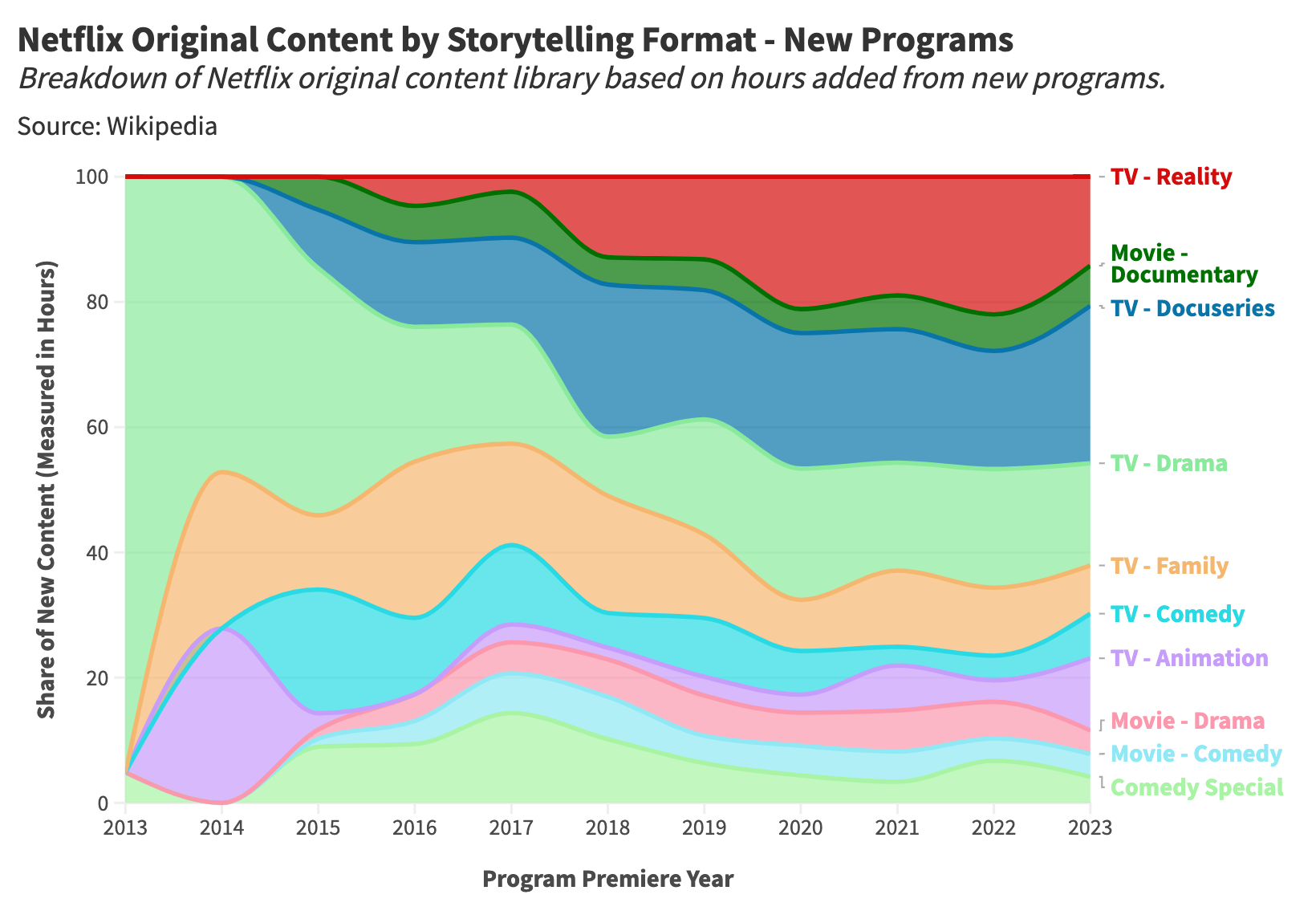
As a scene-setter: Below is a fun post by Daniel Parris from a couple of years ago:

He’s specifically talking about the global and US documentary markets, rather than the particulars of the UK, where documentary has been such a dominant genre in TV going back decades.
Even so, here you can see how factual programming has been such a key genre in Netflix’s mix.
And here is the picture overall in the market - not just Netflix, but across TV and movies compared to a baseline starting in 1995.
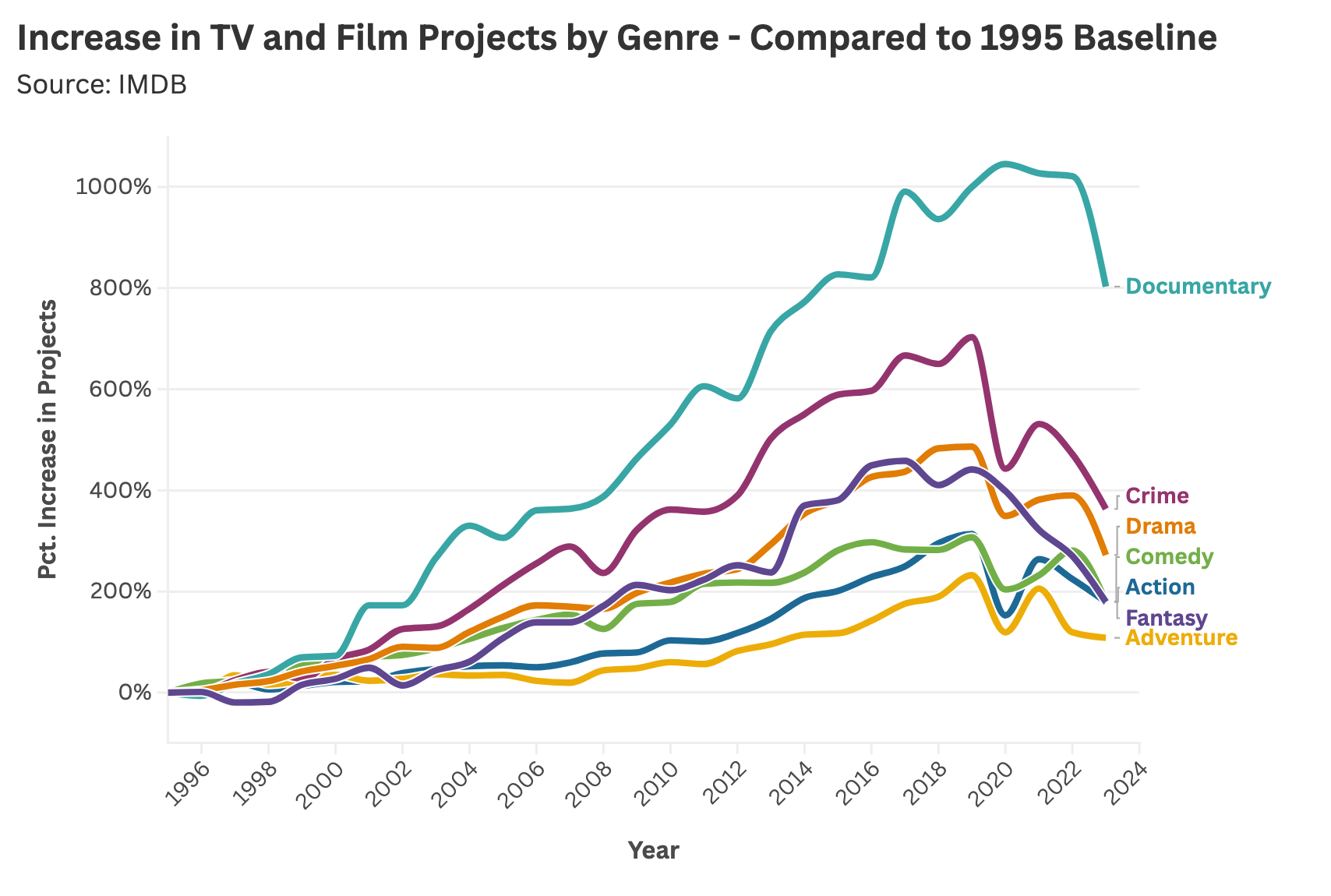
This growth has been in particular parts of the broader factual genre: reality, factual entertainment formats, true crime, talent or sports access documentaries most notably. This created a far more narrow set of parameters (and a far higher bar) of what was (and is) being commissioned or financed, and therefore there continues to be downward pressure on demand and budgets for films that are journalistic in nature. As Reed Hastings has repeatedly emphasised, Netflix is an entertainment company and doesn’t do news, so documentary is a form of entertainment in this scenario. Similarly, brands don’t want to be associated with difficult or tricky subjects, meaning these types of films struggle to look for the usual types of alternative sources of finance.
This is course puts more pressure on public service broadcasters to fund important investigative journalistic films, plus also pushes more film makers to use the tools and platforms out there on the internet to raise awareness, reach audiences, distribute films and hopefully make money.
Key multiplatform starting points for film makers
Work out who your audiences are - there are more than one, including those you want to finance your film, those you want to champion and promote it, and then most importantly - and weirdly, often overlooked - those you want to watch it
Define success - are you looking for reach, impact with specific groups, individuals or organisations, or to make money (these are not mutually exclusive)
Distribution strategy - are you seeking a distributor, an aggregator, or to self-distribute your film? And have to ring-fenced a specific budget for this activity (and yes, it should be a sum closer towards your production budget)
Partners - who are all your various partners across media, companies, institutions, talent and creators (be warned the latter groups might want to be paid)
Audience plan - start building your audience (and it can be as simple as an email list or WhatsApp group) first, not after you finished production.
