


This is the first of a new rhythm for paid subscribers that I’m introducing to give more structure and hopefully clearer signposting to you all. (If you are a free subscriber, you receive these each week as a taster and you can unlock the full post if you’d like by upgrading to a paid subscription).
As a reminder, my new posting regime will be:
What producers need to know - One every fortnight, and will cover all sorts from AI to newsletters, video podcasts to Tubi, Instagram to live events; which hopefully will help give you a solid playbook over time
Creator niches - One a month looking at the latest going on in particular genres or territories (I’ve already covered a whole bunch of these, which you can browse here).
Case studies - A monthly deep dive into a particular company or creator, to hopefully give inspiration for you to cherry pick from
Video chat - I’m going to start doing more freeform semi-regular live videos where I add in more of the information or insights I pick up along the way which are too much to fit into a newsletter, and where you can ask questions
Full archive - for completeness, here is everything I’ve published so far.
There are many sentiments to embed into your thinking about the age of tech disruption, but one of them is there is no new settled normal, rather things change. And often things can change really quickly, without us noticing.
I think we’ve been seeing quite a few shifts in the news creator/direct-to-consumer (D2C) space, which is what this post is about.
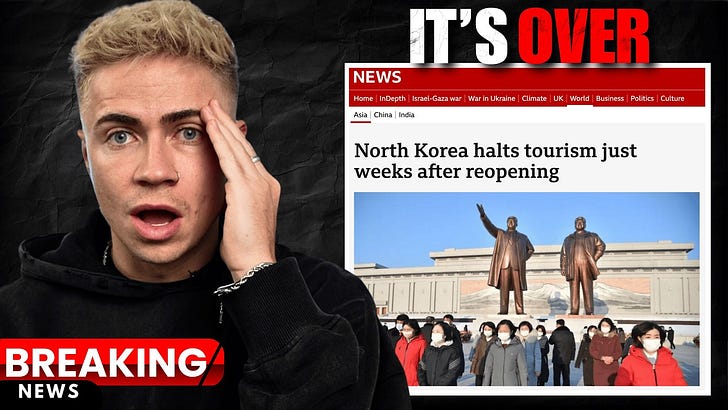
To start with some sweeping generalisations. For a number of years, the vast majority of news creators and podcasters have been in the business of putting their own personal spin on news stories. They specialise in explainer videos or hot takes, largely based on newsgathering and reporting by traditional news organisations. So they are rehashing existing stories, and are not breaking news.
However, in the last year or two, we’ve seen creators emerge who are actually in the game of breaking stories, and often these stories then go on to reach the mainstream and indeed can cause quite a splash. This is across all sorts of formats: newsletters, podcasts, YouTube, TikTok and Instagram. Interestingly, these stories are often in some sort of underserved niche - say local news for example, or a particular field.
In this post, I’ve covered several examples of creators breaking news, in addition to the two previous posts I’ve done on the wider news creator scene:

You might have sensed that I’m less enamoured by the explainer type of news creators, primarily for two reasons.
Firstly, this type of content can encourage audiences to be complacent about how dependent they are on expensive newsgathering operations. So you’ll hear people say ‘Oh, I don’t watch the BBC or read the mainstream media’ but then turns out they get all their information from creators who are relying on these very institutions to do the job of expensive newsgathering for them.
Secondly, there is also a danger of over-estimating the proximity (and therefore the accuracy) of these creators to an actual news story, especially when they speak with such assuredness in their analysis. Say for example journalists previously employed by mainstream news orgs or ex-politicians who are no longer in daily contact with where events happen (parliament for example) and instead are relying on their previous experience that can be years if not decades out of date.
Last point: In the examples below, I’m not commenting on the veracity of the journalism itself, or indeed the political furore that has followed some of their stories. Rather, I’m flagging how each of these examples are evidence of significant evolutions in the D2C market that are important to be aware of.
So, with all that throat-clearing out of the way, here are some examples of how some creators are breaking news, and also have we are seeing shifts in politicians as creators as well.
